



These three programs cover very different applications. Choose the one that aligns with your equipment and your timeline, or keep reading — the sections below cover the ground that comes before any of them.
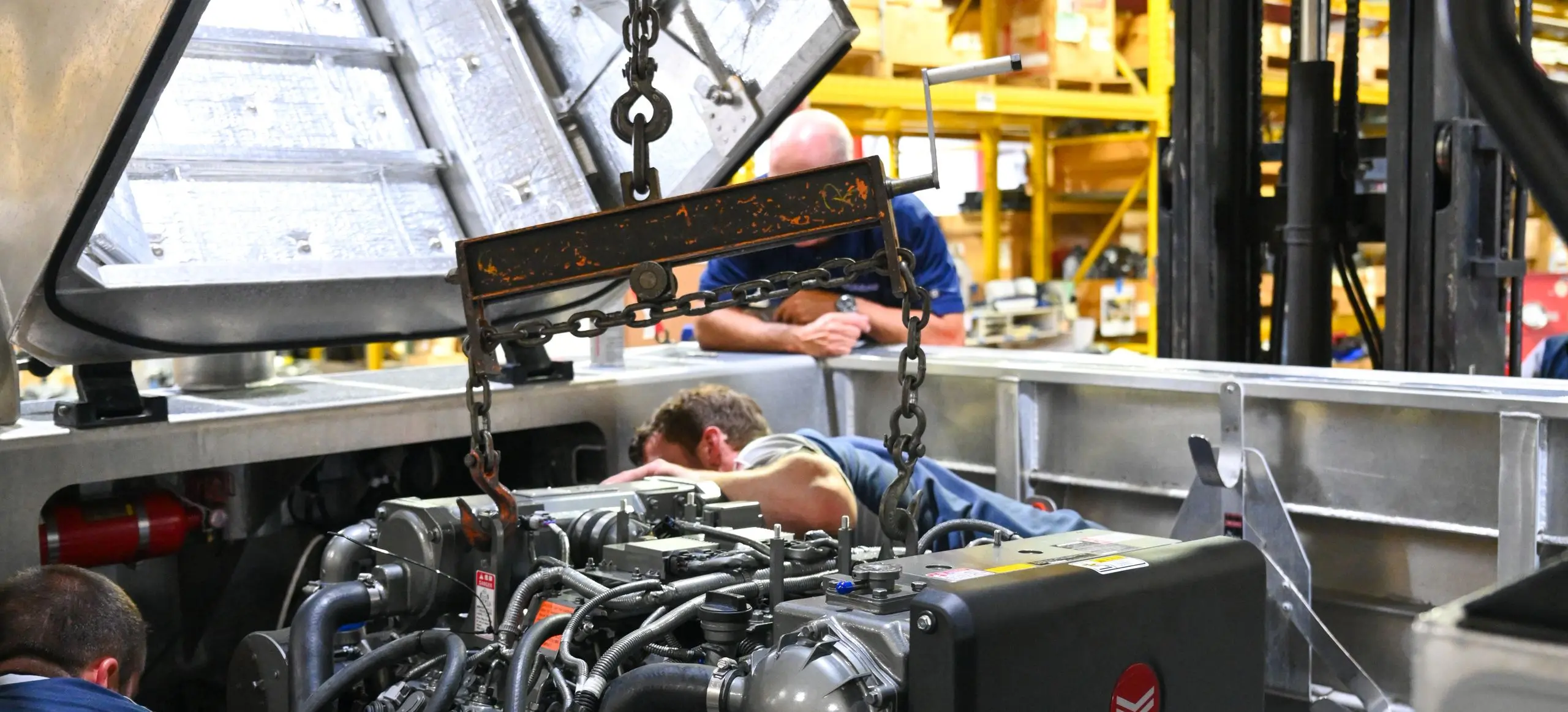
Repower With Mastry
A tired outboard on a boat worth keeping. A diesel under the cockpit sole that has done its miles. A machine that has to be back on the job this week. All three are a repower, and all three come out of Clearwater with a dealer who will stand behind the install.

Repowered by Suzuki
A new Suzuki on the boat you already own
A hull outlives its outboard. When the engine is the tired part, repowering is the cheaper and faster half of the job: new power, new controls where they are needed, and a boat that runs like the one you bought.
Suzuki Repower is Mastry’s program for doing that properly. Three package levels cover a straight Suzuki-to-Suzuki swap, a change from another brand, and a full upgrade that adds new steering and a new battery switch. The work is done at a Suzuki Repower Center, most installs take three to five days, and every repower includes Owner’s Edge pricing on service afterwards.
Powered by YANMAR
A new diesel in the boat you already own
Hulls outlast engines. When the engine is the tired part, a repower is the cheaper half of the decision, and a modern common-rail YANMAR is quieter, cleaner and more efficient than whatever is coming out.
Powerboat or sailboat, inboard, sterndrive or saildrive. Mastry stocks the YANMAR marine range in Clearwater and quotes it through the dealer who will do the work — because on an inboard repower the survey decides the job, not the spec sheet.


Powered by YANMAR
Back on the job in days, not months
On a jobsite the engine is not the asset — the machine is. Repowering keeps the machine working and skips the lead time on a new one, which on current schedules is the difference between a season and a write-off.
There are two ways to get there. A remanufactured engine is rebuilt back to factory specification in our service department and carries a 1-year warranty on the parts replaced. A new replacement engine is factory-built, comes through our engine sales department at several levels of completeness, and carries a 1 to 2 year factory warranty depending on the level.
Repower or rebuild?
It is the only question that matters before you pick a brand, and the answer is usually arithmetic rather than sentiment. YANMAR’s own guidance puts a number on it.
“If a rebuild is going to cost about 40% or more than the amount to install a new engine, then repowering may be a sounder investment.”
— YANMAR Marine
There is an emissions argument too: emissions authorities recommend repowering with engines that meet current regulations, and current common-rail engines are quieter, cleaner and measurably more efficient than what they replace. If two of the four signs below are true of your engine, a quote costs nothing.
Reliability
The engine is becoming unreliable, and you have started planning around it
Power
You are losing horsepower against what the engine used to make
Fuel
Fuel consumption has climbed and stayed there
Cost
Maintenance bills and downtime are both trending the wrong way
What Mastry does in a repower
The dealer does the install. Mastry is the reason the dealer can. Sixty years as a distributor means the engine is on a shelf in Clearwater instead of in a production queue, the technician has been trained on it, and the parts are still here in year twelve.
- The engine is already hereDistributor stock in Clearwater, not a factory order
- 300+ dealers and service partnersAcross North America
- Parts, after the install and after the warrantyGenuine YANMAR and Suzuki parts held in inventory
- Factory warranty, not a shop warrantyRegister the engine and keep to the schedule
60
+
Years powering the Southeast
300
+
Dealers and service partners
28
Suzuki Repower Centers from Maine to Florida
5
Days or fewer for a typical Suzuki repower
FAQs
What to ask before you choose
These are the questions that come up before anyone picks a brand. Once you know which way you are going, the package details and reman levels are on the two program pages above.
How much does a repower cost?
It is quoted, not listed, because the engine is only part of it — controls, rigging, steering, gauges and labor all move the number, and on the industrial side the tier you need changes it again. A repower is almost always the cheaper half of the decision against a new boat or a new machine, and a quote costs a conversation rather than a site visit.
How do I know whether to repower or rebuild?
YANMAR’s guidance is that if a rebuild will cost about 40% or more of installing a new engine, repowering is the sounder investment. Add any of the four signs above — unreliability, lost horsepower, climbing fuel use, rising maintenance and downtime — and the case usually makes itself.
How long will my boat or machine be down?
Most Suzuki repowers take three to five days at the Repower Center. Industrial reman units ship in days rather than the weeks or months a new machine takes, so the downtime is mostly your own shop schedule.
Do I have to replace my controls and gauges?
Sometimes. Compatibility depends on the age and brand of what you have. The Repower Center evaluates it and the package includes whatever has to change. On a brand change it is usually most of it.
Can I repower with a Suzuki if I have another brand on the transom now?
Yes. The Select package exists for exactly that and covers Honda, Mercury, Yamaha and other conventional outboards, including the rigging and system integration.
Is the new engine under factory warranty?
Yes, on both sides. A new Suzuki outboard carries Suzuki’s factory warranty — five years for recreational use, three years for a rental or boat club, one year in commercial service. On the YANMAR industrial side, a remanufactured engine carries a 1-year warranty on the parts replaced, and a new replacement engine carries a 1 to 2 year factory warranty depending on its level of completeness. Register the engine and keep to the maintenance schedule and it stays that way.
Who actually does the work?
A dealer or a Suzuki Repower Center — people who have been trained on the engine and who you can still reach in three years. Mastry supplies the engine, the parts and the technical support behind them.