



The engine range splits the same way boats do. Both halves are new YANMAR diesels, both are quoted through your dealer, and the difference is which one has to fit.
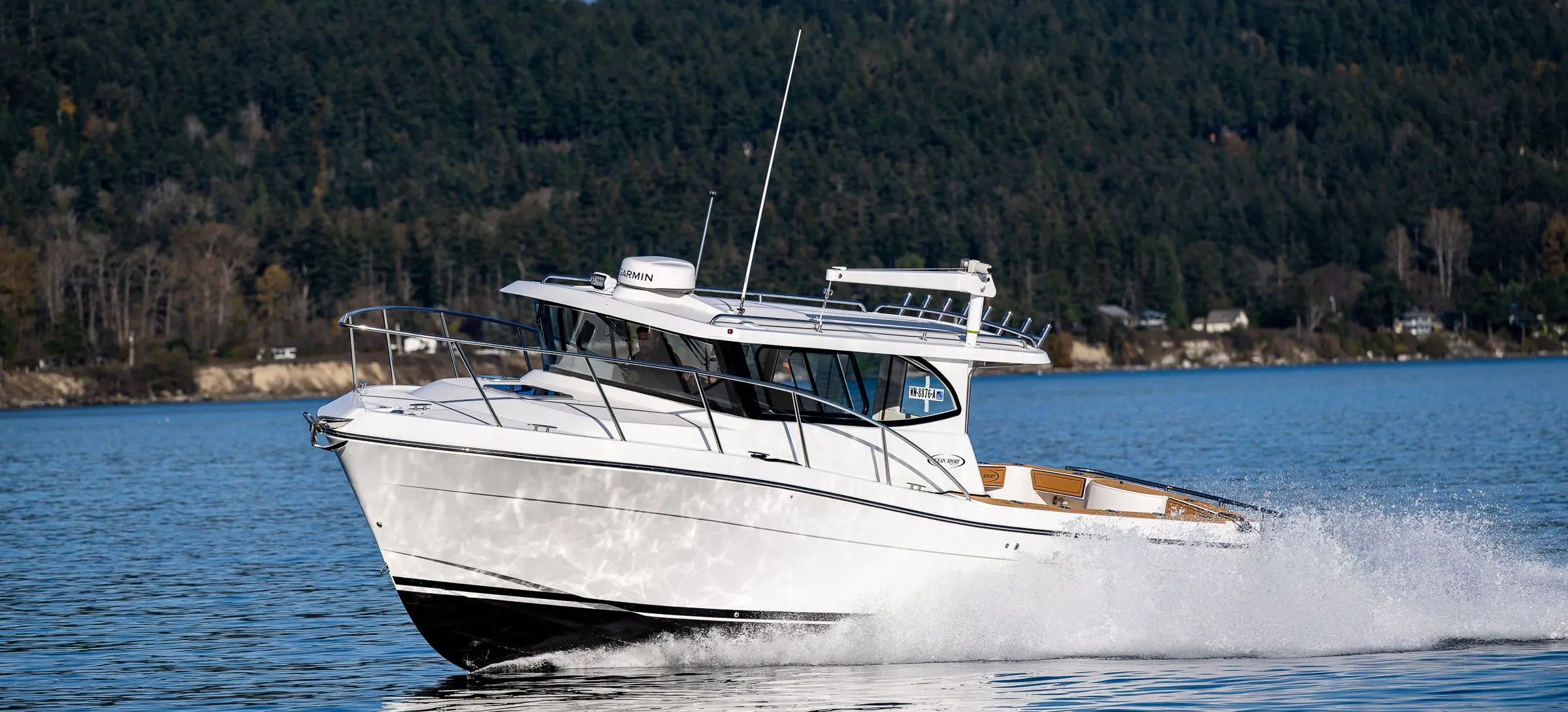
YANMAR Marine Repower
A hull you are not done with and an engine that is finished. Repowering puts a new YANMAR diesel in the boat you already own — quieter, cleaner and more efficient than what comes out — supplied from Clearwater and fitted by a dealer who has seen your boat.
What engine do I need
It is the question everything else waits on, and the answer starts with the boat rather than the catalog. Three things decide it.
- 01Your hullA displacement hull normally wants like-for-like power. A planing hull is sensitive to weight, and that is where a modern diesel’s power-to-weight ratio actually buys you something.
- 02Your engine roomCurrent engines are often smaller and lighter for the same output, which helps. But the footprint has to work, and on a sailboat the box under the companionway steps is the constraint the whole job turns on.
- 03Everything the engine touchesMore power is never only the engine. YANMAR is direct about it: a stronger engine may call for a different marine gear, stronger engine beds, larger prop shafts and propellers, more fuel capacity, and rework to the intake air and exhaust.
Drive type is part of the same conversation. Shaft, saildrive and sterndrive each change what fits and what has to be rebuilt around it, and none of that is decided from a spec sheet. It is decided by a dealer who has looked at the boat.
If your current engine does not meet today’s emissions regulations, the governing authorities recommend repowering to one that does, and a current common-rail YANMAR is quieter, cleaner and measurably more efficient than what it replaces. Where no compliant engine fits without significant modification to the boat, you may qualify for a non-compliant replacement. Your dealer will know which case you are in.
What the job looks like
An outboard repower is measured in days. An inboard is measured in weeks, and anyone who tells you otherwise has not done one. Planning is what keeps it at the short end.
YANMAR’s own guidance: replacing an inboard engine takes between one and four weeks at the yard once the engine arrives, depending on how complex the job is. What decides where you land in that range is how much was settled before the boat came out of the water.
- 01The installerA yard that has inspected the boat quotes the real job, not the average one
- 02The engineModel, drive type and footprint, confirmed against your engine room rather than assumed
- 03Accessories and controlsNew electronics, displays and controls are cheaper to fit during the swap than after it
- 04Materials and deliveryEverything on site before the old engine comes out, rather than the boat waiting on a part
- 05The work nobody mentionedBeds, shafts, exhaust and tankage — found during the survey, not during the install
The engine itself is rarely the long pole. Mastry stocks YANMAR marine diesels in Clearwater, so the wait is the yard’s calendar and your own, not a production queue.
Choosing your installer
Mastry supplies the engine. A dealer fits it, and that choice decides more about how the repower goes than the engine does. YANMAR publishes guidance on picking one; it is worth following, including where it is inconvenient.
- ✓They have seen your boatDo not commission anyone who has quoted without inspecting the vessel
- ✓They ask how you use itCruising, fishing, charter and light commercial are different jobs on the same hull
- ✓They have done work like yoursAsk what comparable repowers they have completed, and at what scale
- ✓They will give you referencesAnd a reputation you can check beyond the ones they offer
- ✓You get the costs in writingA detailed quotation with the technical breakdown. Some costs are genuinely hard to fix up front — converting a gasoline tank to diesel is the classic — and those belong in the conversation before work starts, not during it
Why Mastry
The dealer does the install. Mastry is the reason the dealer can. Sixty years as a YANMAR distributor, now across the Americas, means the engine is on a shelf in Clearwater rather than in a production queue, the technician has been trained on it, and the parts are still here in year twelve.
It is also the reason the warranty behaves. Every new YANMAR marine engine includes YANMAR’s Limited Warranty, eligible engines can add YANMAR’s 3-Year Extended Warranty, and Mastry administers it from Clearwater.
60
+
Years distributing marine power
300
+
Dealers and service partners
4
Weeks or fewer at the yard for a typical inboard repower
From a small auxiliary under a cruiser’s companionway to a pair of sixes in a sportfisherman, quoted and fitted through the same dealer network.
FAQs
Questions worth settling first
The answers below are the ones a repower turns on. If yours is not here, a dealer is a better answer than a web page.
How long will my boat be out of the water?
YANMAR’s guidance is one to four weeks at the yard once the engine arrives, depending on complexity. Planning is what decides where you land in that range — a yard that has inspected the boat and ordered everything before the old engine comes out is working at the short end of it.
How much does a marine repower cost?
It is quoted rather than listed, because the engine is one line of it. Drive type, marine gear, beds, shafts and propellers, controls and displays, exhaust and tankage all move the number, and what a given boat needs is not knowable from a spec sheet. The quote comes after somebody has looked at the boat.
Is the new engine under warranty, and for how long?
Yes. Every new YANMAR marine engine includes YANMAR’s Limited Warranty, and eligible engines can add YANMAR’s 3-Year Extended Warranty when YANMAR’s conditions are met. The terms are YANMAR’s own: see YANMAR’s summary on our Warranty information page, and the YANMAR Limited Warranty Handbook for the full terms. In YANMAR’s words, “Excluded from Extended Warranty: sail drive, stern drive, ZF marine gear.”
Should I repower or rebuild?
Broadly: if a rebuild is going to cost about 40% or more of installing a new engine, YANMAR’s own guidance is that repowering is the sounder investment. A rebuild also commonly leaves parts in place — alternator, starter, water pump — whose remaining life nobody can predict. The full argument is on our repower overview.
Can I repower a sailboat?
Yes. We carry the YANMAR sailboat range in shaft drive and saildrive, and it is quoted and fitted through the dealer network the same way a powerboat repower is. The constraint on a sailboat is almost always the space the engine has to live in, so the survey matters more, not less.
Is there an electric option for a sailboat with a YANMAR YM?
Yes. YANMAR designed the E-Saildrive as a drop-in replacement for the YANMAR YM diesel, and no hull modifications are needed. It comes in 7, 10 and 15 kW. See the YANMAR E-Saildrive.
I have twin engines and only one has failed. Do I replace both?
It depends on what is left in the other one. YANMAR’s guidance is that if the second engine is near the end of its life, replace both at the same time and take the performance and efficiency gain across the pair. If it has roughly half its life or more remaining, replacing only the failed engine may well be the better call.
Will a new engine fit where the old one sat?
Often, and often with room to spare — modern engines tend to be smaller and lighter for the same output. But often is not yours, and a more powerful engine can call for a different marine gear, stronger beds, larger shafts and propellers, more fuel capacity or exhaust rework. That is what the survey is for.
My engine does not meet current emissions regulations. What are my options?
If there is a current compliant engine that fits your boat’s power and space requirements, the emissions authorities recommend repowering to it — and you get a quieter, cleaner, more efficient engine out of it. If no compliant engine fits without significant modification to the boat, you may qualify for a non-compliant replacement. Your dealer can establish which case applies.
Do you repower industrial and commercial diesels too?
Yes, and that is a different program with its own page — remanufactured and new YANMAR power for equipment, generators and pumps. See YANMAR Industrial Repower.